By Green Frog Cleaning Team | Updated June 2025 | 8 min read
What Is a Room-by-Room Cleaning Checklist?
A room-by-room cleaning checklist is a structured guide that tells you exactly what to clean in each space of your home, and how often to do it. It removes guesswork, prevents missed spots, and ensures every room stays hygienic and fresh, whether you’re doing a quick weekly tidy or a full deep clean.
This guide covers every major room in your home, with a clear checklist, cleaning frequency, and answers to the most common questions homeowners ask.
What Supplies Do You Need to Clean Every Room?
Before you start, gather your essentials. Having everything ready saves time and means you won’t stop mid-clean to hunt for a cloth.
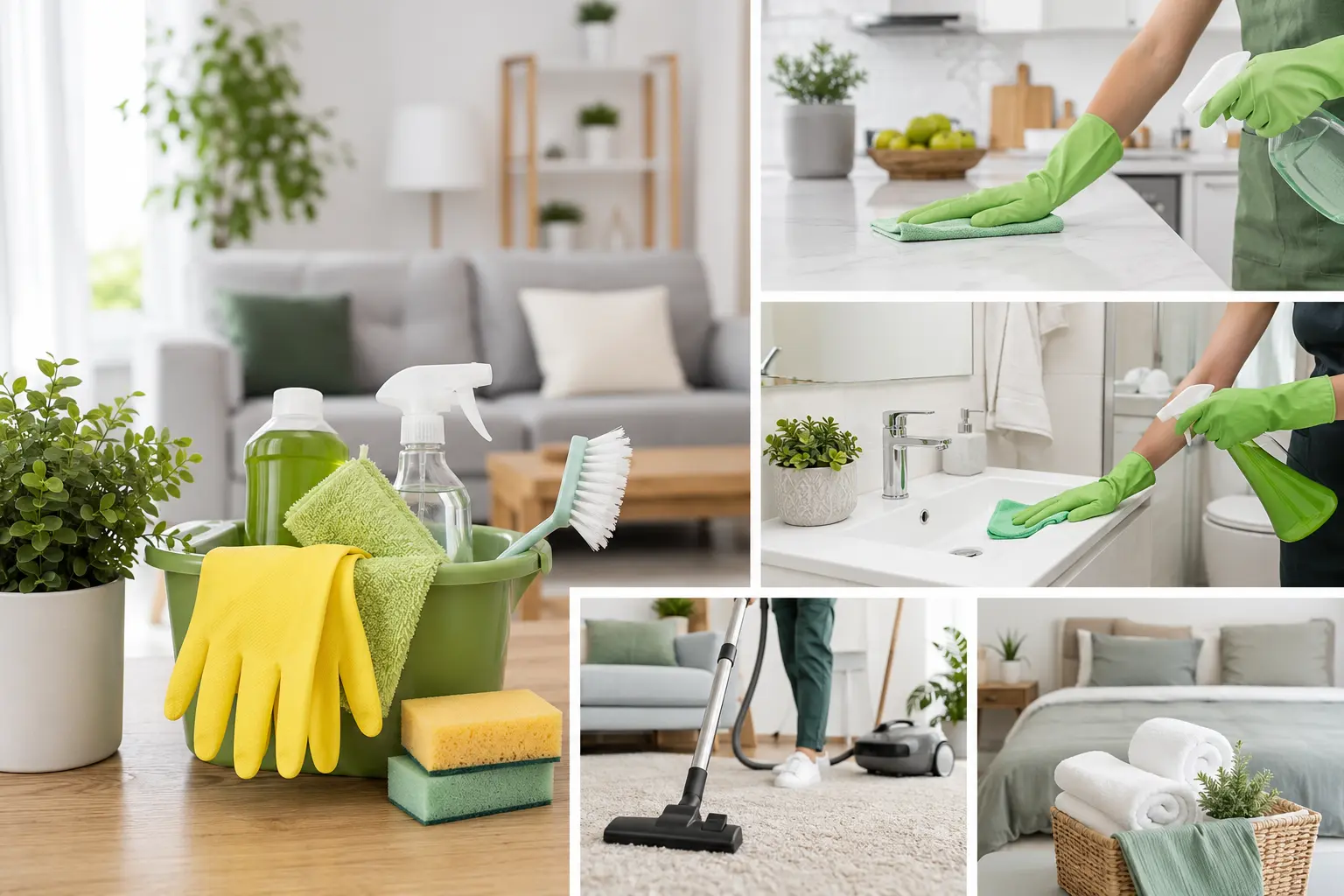
Here’s what you need: an all-purpose cleaner, microfiber cloths, a mop and bucket, a vacuum cleaner, a scrub brush, glass cleaner, trash bags, and rubber gloves. These basics cover most cleaning tasks across every room in your home.
Q: What is the most important cleaning supply to have?
A good all-purpose cleaner and a set of microfiber cloths cover the majority of cleaning tasks in every room. Microfiber is especially effective because it traps dust and bacteria without needing harsh chemicals.
Kitchen Cleaning Checklist
The kitchen is the most bacteria-prone room in your home. Grease, food residue, and moisture create ideal conditions for germs to thrive. Cleaning it consistently protects your family’s health and keeps the space pleasant to cook in.
What to clean in the kitchen:
- Wipe down countertops and backsplash
- Clean the stovetop and remove grease
- Wipe inside and outside of the microwave
- Scrub the sink and polish the faucet
- Wipe cabinet fronts and drawer handles
- Clean the refrigerator exterior and door seals
- Empty and wipe the inside of the bin
- Sweep and mop the floor
Q: How often should you clean the kitchen?
Wipe down counters and the stovetop daily. Do a full kitchen clean, including the sink, appliances, and floor, once a week. Deep clean the fridge and oven once a month.
Q: What is the most germ-laden spot in the kitchen?
The kitchen sink harbours more bacteria than most other surfaces, including the toilet. Scrub it with a disinfectant cleaner at least three times a week to keep it hygienic.
Bathroom Cleaning Checklist
Bathrooms accumulate soap scum, mildew, and bacteria rapidly. A consistent weekly clean prevents buildup and keeps the room smelling fresh. Focus on the toilet, sink, and shower as your priority areas.
What to clean in the bathroom:
- Scrub the toilet bowl inside and out
- Wipe the toilet seat, lid, and base
- Clean the sink basin and faucet
- Wipe and polish the bathroom mirror
- Scrub the shower tiles and glass screen
- Clean the bathtub if applicable
- Mop the floor and behind the toilet
- Replace hand towels and bath mats
- Empty the bin and wipe it down
Q: How often should you deep clean the bathroom?
Give the bathroom a thorough clean once a week. In households with multiple people or young children, a quick wipe-down of the toilet and sink every 2–3 days keeps hygiene levels safe.
Q: How do you remove mold from bathroom grout?
Apply a baking soda and water paste to the grout, scrub with a stiff brush, then rinse. For stubborn mould, a diluted white vinegar solution left for 10 minutes before scrubbing is highly effective and non-toxic.
Bedroom Cleaning Checklist
The bedroom is where you spend roughly a third of your life. Dust mites in bedding, allergens on surfaces, and clutter on floors all affect your sleep quality and wellbeing. A weekly clean makes a real difference.
What to clean in the bedroom:
- Change and wash bed sheets and pillowcases
- Dust all surfaces, nightstands, dressers, shelves
- Wipe down light switches and door handles
- Vacuum or sweep the floor and under the bed
- Clean mirrors and glass surfaces
- Declutter and organise surfaces
- Empty the bin
Q: How often should you wash bed sheets?
Wash bed sheets every 1–2 weeks. Pillowcases, which touch your face directly, should ideally be changed weekly to reduce skin breakouts and allergen exposure.
Q: How do you reduce dust in the bedroom?
Use a microfiber cloth rather than a dry duster, as it traps particles instead of scattering them. Vacuum with a HEPA filter, and keep heavy curtains and soft furnishings to a minimum to reduce dust-trapping surfaces.
Living Room Cleaning Checklist
The living room is where dust, pet hair, and everyday mess accumulate fastest. Regular vacuuming and surface wiping keeps it presentable and reduces allergens, especially important for families with pets or young children.
What to clean in the living room:
- Dust furniture, shelves, and picture frames
- Wipe electronics, TV, remote controls, speakers
- Vacuum sofa cushions and under seat pads
- Vacuum the rug or mop hard floors
- Wipe down window sills and skirting boards
- Clean windows and glass surfaces
- Plump and arrange cushions
- Declutter the coffee table and shelves
Q: How often should you vacuum the living room?
Vacuum the living room at least twice a week, or daily if you have pets. High-foot-traffic areas trap dirt quickly, and regular vacuuming prevents grit from scratching hard flooring or embedding in carpet fibres.
Q: How do you clean a fabric sofa properly?
Vacuum the sofa thoroughly first using an upholstery attachment. Spot-clean stains with a mild fabric cleaner and a microfiber cloth, blotting rather than rubbing. For a deeper clean, a steam cleaner is effective and completely chemical-free.
Laundry Room Cleaning Checklist
The laundry room is often overlooked, yet it is one of the most moisture-prone areas in a home. Regular cleaning prevents mold, lint buildup, and machine odours, and helps your appliances last significantly longer.
What to clean in the laundry room:
- Wipe the exterior of the washing machine and dryer
- Clean the detergent drawer and drum seal
- Empty and clean the dryer lint trap
- Run a hot empty wash to clean the drum monthly
- Sweep and mop the floor
- Wipe shelves and storage surfaces
- Check for mould around pipes and walls
Q: How often should you clean the washing machine?
Run a cleaning cycle with a machine cleaner tablet or white vinegar once a month. Wipe the door seal and detergent drawer weekly to prevent soap residue and mold from building up.
Q: Why does my washing machine smell bad?
A bad smell usually means mold or detergent residue has built up inside the drum or door seal. Leave the door open between washes to let moisture escape, and run a monthly hot maintenance wash to keep it fresh.
How Often Should You Clean Each Room?
Use this frequency guide to plan your cleaning routine so no room ever falls too far behind.
Kitchen — Quick tidy daily, full clean weekly, deep clean monthly.
Bathroom — Quick wipe every 2–3 days, full clean weekly, deep clean monthly.
Bedroom — Weekly tidy and full clean, deep clean monthly.
Living Room — Quick daily tidy, full clean weekly, deep clean seasonally.
Laundry Room — Weekly wipe-down, full clean monthly, deep clean quarterly.
Most Commonly Missed Spots at Home
Even thorough cleaners regularly overlook these areas. Adding them to your routine makes a significant difference to overall hygiene and air quality.
1. Light switches — Touched dozens of times every day but rarely cleaned. Wipe with a disinfectant cloth at least once a week.
2. Door handles — High-contact surfaces that transfer germs constantly between every room in the house.
3. Ceiling fan blades — These collect thick layers of dust that circulate right back into the room the moment the fan is switched on.
4. Baseboards and skirting boards — Dust and pet hair builds up here unnoticed along the bottom of every wall. Wipe monthly.
5. Behind appliances — The area behind the fridge and oven collects grease and dust rapidly and is almost never moved for cleaning.
6. Shower curtain and rings — Mould and soap residue builds up here quickly in humid bathrooms, often going unnoticed until it becomes severe.
7. Inside kitchen bins — Even with bin liners in place, the inside of bins needs regular disinfecting to prevent odours and bacteria.
8. Window tracks — Dirt, dead insects, and debris accumulate in window channels. Use a stiff brush or old toothbrush to clear them out.
FAQ’s
Q: How often should you clean your entire house?
Most rooms need a light clean weekly and a deep clean monthly. High-traffic areas like the kitchen and bathroom benefit from daily wipe-downs to prevent bacteria and grime buildup. A realistic routine is a 5–10 minute daily tidy, a 1.5–2 hour weekly clean, and a 3–5 hour monthly deep clean.
Q: What room should you clean first in the house?
Start with the kitchen or bathrooms, as these are the most bacteria-prone rooms. Cleaning them first ensures the most hygienic spaces are dealt with before you move to lower-priority areas, and means you’re using fresh energy and clean clothes where they matter most.
Q: How long does it take to clean an entire house?
A standard 3-bedroom home takes 2–4 hours for a thorough clean. A quick weekly tidy takes around 1 – 1.5 hours, while a full deep clean can take 4–6 hours depending on the home’s size and current condition.
Q: Is it better to dust or vacuum first?
Always dust before you vacuum. Dusting dislodges particles onto the floor, and vacuuming afterwards picks them all up cleanly. If you vacuum first, you’ll simply disturb the same dust back into the air and onto freshly cleaned surfaces.
Q: What is the most missed spot when cleaning a home?
The most commonly missed spots are light switches, door handles, baseboards, ceiling fans, and the area behind and under large appliances. These areas harbour significant dust and bacteria but are overlooked because they aren’t immediately visible at eye level.
Final Thought
A consistent cleaning routine, even just 20 minutes a day, keeps your home feeling fresh, reduces allergens, and means deep cleans are never a dreaded all-day event. Use this checklist as your guide and work through one room at a time.
And when life gets too busy to keep up, Green Frog Cleaning is here to handle every room on this list for you, professionally, thoroughly, and with eco-friendly products that are safe for your family.
Book your free cleaning estimate with Green Frog Cleaning today.